How Play Therapy Helps Children Say What Words Cannot
Published 20 August 2026
Play Therapy for children can help when feelings, worries or experiences are too complicated to explain in words. Children often communicate through play long before they can give adults a clear account of what is happening inside them.
For a parent or carer, this can feel both worrying and confusing. You may notice changes in behaviour, sleep, confidence, separation, anger, withdrawal or anxiety, while your child may say very little about why life feels so hard.
Play Therapy offers a steady, accepting space where the child can express, explore and make sense of their world in a rhythm that feels manageable. The work is not about forcing the child to talk. It is about creating enough safety for communication to emerge in the way that is most natural to them.
What Is Play Therapy?
Play Therapy is a form of child therapy that uses play, creativity and the therapeutic relationship to help children communicate and process feelings. It is not simply a reward, a distraction or a chance to play with toys. The materials in the room are chosen because they offer children different ways to express what may be difficult to say directly.
The child might use figures, sand, drawing, stories, movement, puppets or sensory materials. Some children talk a lot as they play. Some use very few words. Others may repeat the same story, scene or conflict until it begins to feel less overwhelming.
The therapist is paying attention to themes, feelings, relationships, changes and the child's sense of safety. The aim is not to interpret every object or action in a fixed way. The aim is to understand the child carefully over time, within a relationship that feels steady and non-judgemental.
Why Children Often Say More Through Play Than Words
Children do not always have the language, memory organisation or emotional distance needed to explain what they feel. Even when they know something is wrong, they may not know how to put it into a sentence that makes sense to an adult.
Difficult experiences can also be held in the body before they can be held in words. The child may show distress through behaviour, control, avoidance, separation anxiety, anger, regression, perfectionism or withdrawal. These responses can be easy to misunderstand if adults only focus on the behaviour itself.
Play gives children a symbolic language. Through stories, figures, sand, drawing, movement and repeated themes, the child may begin to show fears, hopes, conflicts, losses or questions that are hard to speak about directly. This is why play can become a serious therapeutic communication, even when it looks ordinary from the outside.
What a Play Therapy Session May Look Like
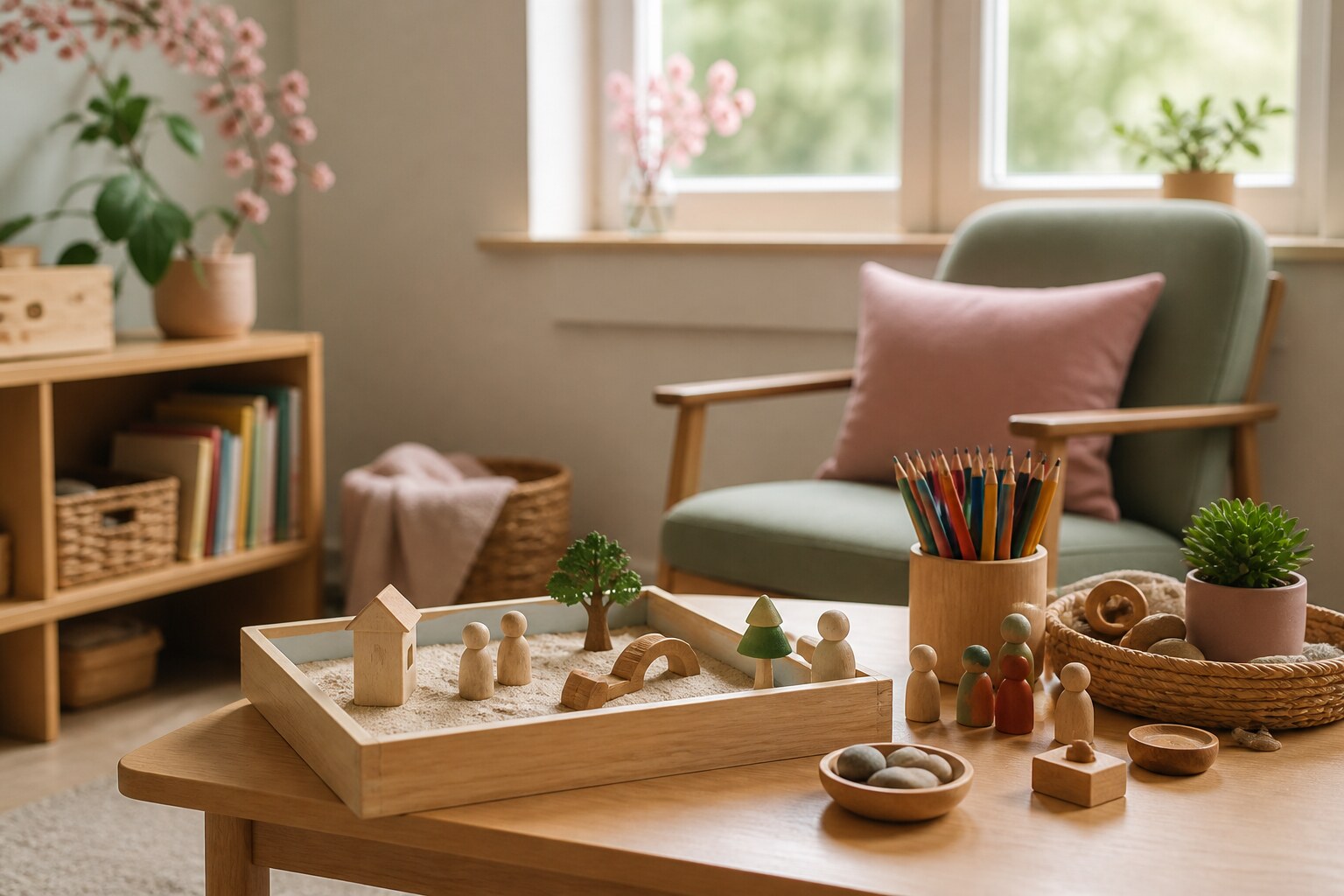
A Play Therapy room usually contains carefully chosen materials such as art supplies, sand tray items, small figures, puppets, stories, musical instruments and sensory resources. These resources give children choices about how close or distant, direct or indirect, quiet or active the work needs to feel.
Sessions are usually consistent in length, setting and rhythm. This predictability matters. Children who feel unsure, overwhelmed or mistrustful often need to experience the same safe pattern many times before deeper communication becomes possible.
The therapist's role is to notice, reflect, hold boundaries and stay emotionally available. The child is not rushed into disclosure or pushed to explain the play. Trust is built through consistency, respect and the repeated experience of being accepted as they are.
Safety, PACE and the Therapeutic Relationship
The relationship between the child and therapist is central. Children are more likely to explore difficult feelings when they experience the room as safe, predictable and non-judgemental.
This is why timing and readiness still matter: the child may need time to settle, check whether the therapist can be trusted, and find their own way of communicating. Moving too quickly can leave the child feeling exposed or misunderstood.
PACE also matters as a recognised relational stance: Playfulness, Acceptance, Curiosity and Empathy. In therapy and in therapeutic parenting, PACE can help adults stay connected to the child's inner experience rather than responding only to the surface behaviour.
PACE is not about ignoring boundaries or making everything light. It is about communicating safety. The child may still need clear limits, but those limits can be held with warmth, curiosity and empathy rather than criticism or shame.
How the Therapist Understands the Play
A Play Therapist does not assume that one toy, colour or story always means one specific thing. Children's play is richer and more personal than that. Understanding comes from careful attention to patterns over time.
The therapist may notice repeated themes, changes in confidence, how the child handles endings, whether the play becomes more flexible, and how the child uses the therapist in the room. These details can help build a picture of what the child may be carrying emotionally.
This reflective process is held ethically and carefully. Professional training, supervision, safeguarding responsibilities and ongoing reflection all matter, because children deserve therapy that is thoughtful rather than intrusive or speculative.
What Parents Can Expect Around Privacy and Updates
It is natural for parents and carers or those who hold parental responsibility to want to know what is happening in the room. At the same time, children need a degree of privacy for therapy to feel trustworthy. If the child feels that every detail will be reported back, they may become guarded or feel exposed.
This does not mean parents, carers or those who hold parental responsibility are shut out. Parent conversations can help make sense of themes, changes and practical support around the child, without turning the therapy into something the child feels watched or judged for.
There are also clear limits to confidentiality. If there is a safeguarding concern, or if information needs to be shared to keep the child or someone else safe, the therapist has a responsibility to act. Children and parents should be helped to understand this in an age-appropriate and transparent way.
How Progress May Show Up Outside the Room
Progress in Play Therapy is not always dramatic or easy to measure quickly. Sometimes the child needs to revisit the same emotional material many times before it begins to shift. Sometimes things feel more unsettled for a while because feelings are closer to the surface.
Parents may notice small but meaningful changes: the child recovering more quickly after upset, showing more flexible play, sleeping a little better, asking for help sooner, tolerating frustration, naming feelings, or becoming less stuck in one pattern of response.
Progress can also show in the adults around the child. When parents, carers or schools become more able to read behaviour as communication, the child may experience more consistent support and less shame. That wider relational environment can make therapy feel safer and more useful.
How Parents Can Support Without Taking Over the Therapy
Parents and carers do not need to become therapists at home. Often the most helpful support is steady, ordinary and relational: noticing, naming, wondering, repairing, holding limits and staying available after difficult moments.
You might say, "I wonder if today felt a bit much," rather than asking lots of questions. You might make space for drawing, sensory play or quiet connection after school. You might hold a boundary while making it clear that the relationship is still secure.
PACE can be helpful here too. Playfulness can soften moments that have become tense. Acceptance can show the child that their feelings are not too much. Curiosity can help adults wonder what sits underneath behaviour. Empathy tells the child they are not alone with what they feel.
This is not about getting every response right. Repair matters. When adults can return, reconnect and wonder together after a rupture, children gradually learn that difficult feelings do not have to end the relationship.
When Play Therapy May Be Helpful
Play Therapy may be considered when the child is struggling with anxiety, grief, family change, trauma, separation, low confidence, friendship difficulties, emotional outbursts, withdrawal or experiences they cannot easily explain.
It can also support children who communicate more through behaviour than words. Instead of asking only, "How do we stop this behaviour?", therapy can help adults wonder, "What might this behaviour be trying to communicate?"
Therapy is not a promise that everything will change quickly. It is a careful process of helping the child feel less alone with what they are carrying and more able to understand, regulate and express themselves.
An initial conversation can help clarify whether Play Therapy feels appropriate, whether another kind of support may be better, and what the child and family may need before sessions begin.
FAQs About Play Therapy
Is Play Therapy just playing?
No. Play is the child's natural language, but the therapist is listening carefully to themes, feelings, relationships, choices and changes over time.
The room may look playful, but the work is therapeutic. It is held by training, boundaries, reflection, safeguarding and the relationship between the child and therapist.
Will my child talk about what has happened?
Not necessarily. Some children talk, some do not, and many communicate through play before words become possible.
The child will not be pushed into sharing any information. Feeling in control of how they communicate is part of what helps the therapy feel safe.
Will I be told what my child says or does in every session?
Usually not in detail, because privacy helps the child trust the therapeutic space. Parents are still supported with appropriate updates, themes, safeguarding information and conversations about how to help at home.
The balance is to keep parents meaningfully involved while protecting the child's need for a private emotional space.
How long does Play Therapy take?
This varies. Some children need a short piece of focused work, while others need longer-term support. The timing depends on the child's needs, history, safety and readiness. All of this is discussed in the initial assessment.
It can be helpful to review progress together rather than deciding in advance that the child should be finished by a fixed date.
Can Play Therapy help if my child mostly shows distress through behaviour?
Yes, this is one reason parents often consider Play Therapy. Behaviour can be a form of communication, especially when the child is overwhelmed or cannot explain what they feel.
Therapy does not excuse harmful behaviour, but it can help adults understand what may sit underneath it so that support is compassionate, boundaried and better matched to the child's needs.
Further Reading and Related Support
These links offer source context and related Cherry Blossom pages for parents, carers and professionals who want to understand the wider support available.
- Play Therapy UK guide to Play Therapy
An overview of Play Therapy from Play Therapy UK.
- Therapy for children and young adults
Learn more about Cherry Blossom Therapy and the therapeutic support available for children and young people.
- How counselling and psychotherapy differ
A related guide for families thinking about what kind of therapeutic support may be appropriate.
- Cherry Blossom Training for professionals
Training and CPD for professionals, teams and services working with children, families and systems.
Thinking About Support for Your Child
If you are wondering whether therapy could help your child or young person, an initial conversation can help you think through what support may feel right.
You do not need to have every detail worked out before getting in touch. It is enough to begin with what you have noticed and what you are worried about.
- Contact Sarah about child therapy
Start with a gentle initial enquiry about whether therapy may be a helpful next step.